Distance Management Self-Defense: 7 Smart Ways to Create Space
Distance management self-defense begins with noticing when another person reduces your space or limits your movement. Someone might stand too close, block your path, follow your movement, or ignore a clear request for space. Recognizing those changes gives you an opportunity to act before the interaction becomes a physical struggle.
The goal is to preserve your ability to move and make decisions. For most adults, leaving an uncomfortable or threatening encounter and getting help is a better outcome than remaining close enough to exchange strikes.
Managing distance involves more than taking a step backward. Your position, nearby obstacles, available exits, and the other person’s behavior all affect what space is useful. These seven habits explain how to approach those decisions in everyday life and controlled training.
1. Start Distance Management Self-Defense Before Contact
Pay attention when an interaction changes. A person moving closer once in a crowded setting is different from someone repeatedly following your movement after you step away. Blocking your route or continuing to approach after a boundary also deserves attention.
Look at behavior and context together. Close proximity alone does not establish harmful intent, especially on public transit or in a busy doorway. You can still choose more space without accusing someone or starting a confrontation.
Act while straightforward options remain available. You can move toward staff, choose another route, end a conversation, or leave the area. You do not need to establish exactly what another person intends before making a reasonable adjustment.
Useful situational awareness connects what you notice to what you do next. Seeing that a route is narrowing matters most when it prompts you to reconsider where you stand or walk.
2. Choose Useful Space Rather Than a Fixed Measurement
There is no universal distance that guarantees safety. The space you need depends on the setting, how quickly someone is moving, your mobility, and what routes remain available.
More separation often gives you additional time to notice movement and respond. But a few extra steps are less useful if they leave you against a locked door, beside traffic, or trapped between parked cars.
Distance management self-defense asks two connected questions: How close is the person, and where can I go from here? Keep both in mind instead of concentrating on a specific number of feet.
For example, standing farther away at the closed end of a hallway can leave you with fewer options than moving toward an accessible exit. Your destination matters as much as the gap you create.
Distance also has limits. Someone can close space quickly, and separation alone is not reliable protection from a weapon. If a weapon is present, prioritize getting away or reaching appropriate protection when feasible and contacting emergency services when safe. No fixed spacing rule resolves every threat.
3. Keep Your Route Available as You Move
Backing straight away is not always the best choice. Behind you there might be a curb, a chair, a stair, or another person. Moving without checking the space can create a fall or trap you against an obstacle.
Look for a clear route and move toward it when available. A change of direction can help you use an opening, but no particular angle guarantees that someone cannot reach you. Keep reassessing as both of you move.
Avoid crowding or blocking the other person’s way out. In a tense conversation, leaving room for both people to disengage can reduce the pressure of the interaction.
Distance management self-defense also involves balance. Use steps that let you stop, turn, or continue moving without stumbling. Your mobility, footwear, and the surface under you affect what is practical.
You do not need to maintain a special pose before leaving. If a clear opportunity to get away appears, take it rather than staying in place to demonstrate readiness.
4. Use Existing Obstacles Without Trapping Yourself
A table, counter, parked car, or other obstacle can provide separation and make a direct approach less straightforward. Whether it helps depends on where it leaves you and whether you can continue toward an exit.
A counter between you and an agitated person is useful only if your side still offers a route or access to help. Retreating behind furniture into a dead end can create a different problem.
Look at obstacles as part of the whole setting. Notice narrow gaps, unstable objects, clutter, and places where movement becomes restricted. A shopping cart can provide temporary separation, but it can also obstruct your own path.
In distance management self-defense, an obstacle should support disengagement. You do not need to remain on opposite sides of an object arguing if you have an opportunity to leave.
An ordinary object is not automatically protective cover. A chair or table that interrupts someone’s approach should not be assumed to protect you from a weapon.
5. Pair Clear Boundaries With Practical Action
Use short statements that communicate what you need: “Please step back,” “Stop there,” or “I’m leaving.” Speak clearly enough to be heard without turning the exchange into an argument.
Then pay attention to the response. If someone ignores your request and keeps approaching, consider moving away, getting assistance, or ending the interaction. Words alone do not maintain space.
The CDC’s NIOSH workplace-violence training for healthcare workers advises respecting personal space, keeping hands visible, and avoiding unnecessary touch when someone is upset. Its guidance on non-verbal de-escalation provides a relevant communication resource, although its examples address a healthcare setting.
Distance management self-defense does not require you to keep talking. If speaking would delay an available exit, leaving takes priority. You also do not need to persuade the other person that your boundary is justified.
Our article on verbal boundaries and de-escalation explains how communication fits alongside awareness, positioning, and opportunities to leave.
6. Reassess When Contact Changes Your Options
A grab, push, or blocked route changes the problem. You no longer have the same freedom to choose your distance, and simply pulling harder or rushing backward can make balance harder to maintain.
At close range, practical priorities include protecting yourself from further harm, maintaining or recovering balance, and recognizing an opportunity to disengage. The response depends on the contact, your position, nearby obstacles, and the other person’s movement.
No single response fits every grab. An open room, a narrow hallway, and an uneven sidewalk present different conditions. That is why physical responses belong in supervised practice where contact and resistance have clear limits.
Breathing remains part of the work, but it does not release a hold or remove the danger. In controlled training, you can notice breath-holding and unnecessary tension while practicing movement. Our article on breathing exercises to stay calm explains that approach.
If you end up on the ground, your options change again. Our discussion of ground movement for self-defense considers movement and returning to your feet when appropriate. The aim remains creating an opportunity to leave, rather than prolonging contact.
7. Practice Distance Management With Changing Conditions
Useful practice starts with a clear task and manageable pressure. One partner can approach slowly while the other notices the changing gap, communicates a boundary, and moves toward an agreed exit.
Once students understand the exercise, the instructor can change the starting position, available space, or direction of approach. Add one challenge at a time so students can recognize what changed and adjust their decisions.
Distance management self-defense training should reward noticing a way out. If every exercise requires students to stay and exchange contact, it leaves little room to practice disengagement.
At Maryland Systema, this work connects awareness, breathing, balance, movement, and controlled partner contact. Adults with different fitness levels can discuss suitable adjustments and begin at a manageable pace. Students should understand the exercise, its limits, and how to stop before pressure increases.
You can try a free first group class in Rockville or Takoma Park. Visit Maryland Systema to arrange your first class and learn how we practice these decisions.
Distance management self-defense becomes useful through ordinary choices: notice closing space, keep a route available, communicate when appropriate, and move toward help or an exit. The purpose is to preserve options and leave when an opportunity appears.
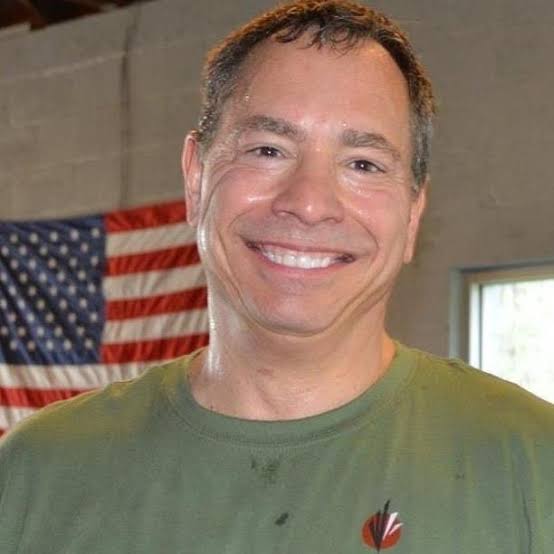
Jim Eglin
https://marylandsystema.comJim Eglin is the founder and chief instructor of Maryland Systema. He has trained in Systema, Krav Maga, judo, boxing, and jiu-jitsu, and received his full Systema instructor certification in 2019. Jim teaches practical self-defense with an emphasis on breathing, movement, balance, awareness, controlled contact, and responsible decision-making under pressure. He leads adult classes in Rockville and Takoma Park, Maryland.