A martial arts class should help you make better decisions when a situation becomes uncertain, not just teach you how to perform techniques under ideal conditions. For adults considering Martial Arts in Rockville, that difference matters. Practical martial arts training should help you improve awareness, movement, balance, and your ability to think clearly as distance, pressure, and your surroundings change.
Real situations rarely unfold in a predictable way. You may have limited space, poor footing, more than one person nearby, or no clear idea of what the other person will do next. That means useful self-defense training should prepare you for change rather than depend on a fixed sequence of movements.
At Maryland Systema, the goal is not to memorize a long list of responses. You learn to stay aware of what is happening, protect your balance, manage distance, keep moving when needed, and make choices based on the situation in front of you. Those skills become more important when stress starts to affect your breathing, posture, attention, and coordination.
For many adults, that is what makes practical martial arts training valuable. You are not training for a perfect demonstration. You are learning how to respond when conditions are less organized, pressure rises, and you need to make a sound decision without wasting time or movement.
What Practical Martial Arts Training Should Include
Self-defense begins before physical contact. A useful martial arts class should help you recognize when a situation is starting to change, manage distance, set clear boundaries, and notice exits before you need them. These skills are part of self-defense because they can determine whether physical action becomes necessary at all.
Physical training should also reflect the fact that real situations are rarely predictable. You may be tired, surprised, off balance, seated, backed against a wall, confined by a narrow space, or dealing with unwanted contact at close range. Training has limited value if it only works when both people are standing in ideal positions and cooperating with each other.
Practical martial arts training should give you options instead of promising one answer for every problem. You learn how to move without losing balance, manage space, reduce pressure, protect yourself at close range, and create an opportunity to leave when possible.
The right response will depend on what is happening. Creating distance may be the best choice in one situation. In another, your first priority may be staying on your feet during a grab, protecting your balance in a confined area, or getting up safely from the ground.
That ability to adjust matters. Good training should prepare you to respond to changing conditions rather than depend on everything happening exactly as expected.
Martial Arts in Rockville Without the Pressure to Perform
Many adults hesitate to begin martial arts because they assume they need to be athletic, experienced, or comfortable in a highly competitive environment. Others are simply not interested in tournaments, belt tests, uniforms, or long-term contracts. If your main goal is practical personal safety, those preferences make sense.
A good adult program should give you room to learn at a pace that fits your current ability. A beginner may need time to become comfortable moving on the ground, working with another person, or dealing with light physical pressure. If you are new to this type of training, our beginner guide to Systema training explains what to expect.
Someone returning after an injury may need to move more slowly or modify certain exercises. Our guide to self-defense after injury explains why training should adapt to what you can safely use now. Progress does not require everyone to train the same way.
At Maryland Systema, training follows adaptable Systema principles rather than fixed routines. You work with breathing, posture, relaxation, balance, and natural movement so you can stay mobile and make clear decisions as pressure increases.
Training can include strikes, grabs, restraint, close-range contact, ground movement, confined spaces, and weapon-related threats. The goal is not to perform perfectly or prove yourself to anyone. Pressure is added gradually so you can learn how your breathing, balance, attention, and movement change when the situation becomes more demanding.
For adults looking for Martial Arts in Rockville, that approach offers a practical way to train without turning every class into a test of toughness or athletic ability.
Why breathing and balance matter under pressure
Breathing may seem basic, but it affects nearly everything you do under pressure. When people become tense or hold their breath, movement often becomes more rigid, attention narrows, and fatigue builds faster. Learning to keep breathing helps you stay aware of what is happening, manage tension, conserve energy, and make better decisions instead of reacting blindly.
Balance matters for the same reason. If you lose your structure, it becomes harder to move, create distance, protect yourself, or change direction. Good balance does not mean holding a perfect position. It means learning how to recover when you are pushed, pulled, bumped, turned, or forced to move around another person or an obstacle.
At Maryland Systema, breathing and balance are trained together because one affects the other. Excess tension can disrupt both. When you learn to release unnecessary tension, keep breathing, and continue moving, you have a better chance of staying functional as pressure increases.
These skills also have value outside training. Better coordination, posture, and controlled movement can help adults who spend long hours sitting, commute regularly, or simply want to move with greater stability and awareness in everyday life.
Questions to ask before choosing a martial arts school
Before choosing a martial arts school, look closely at what students actually practice and how beginners are treated. Ask whether the training includes awareness, avoidance, personal boundaries, and de-escalation, not just physical responses. Find out whether students work with changing distance, resistance, position, and surroundings or mainly repeat fixed sequences.
You should also ask how instructors work with different fitness levels, ages, injuries, and physical limitations. Training should challenge you, but the level of pressure should make sense for your experience and ability. A responsible instructor knows the difference between useful discomfort and unnecessary pain or intimidation.
Pay attention to the way students interact with each other. You should feel comfortable asking questions, slowing down when needed, and working with people who take safety seriously. The atmosphere should support learning rather than competition for attention or status.
Most importantly, look for training that develops judgment. Practical self-defense is not about proving how tough you are. It is about recognizing problems earlier, making sound choices, controlling your own actions, and using only the level of response the situation requires.
Start with observation, then build through consistent practice
Your first class is not a test of toughness or athletic ability. It is a chance to see how the instructor teaches, how students work together, and whether the training matches what you want from martial arts. You should be able to ask questions, work at a reasonable pace, and get a clear sense of how the class approaches safety, pressure, and practical self-defense.
At Maryland Systema, you do not need previous martial arts experience to begin. Comfortable clothing and a willingness to learn are enough for your first class. You can focus on how the training feels, how clearly the material is explained, and whether the exercises help you understand movement, distance, balance, and decision-making in a useful way.
The real value of martial arts training develops through consistent practice. Over time, you can become more aware of your surroundings, more comfortable with physical contact, better able to move under pressure, and less likely to become overwhelmed when something unexpected happens.
If you are considering Martial Arts in Rockville, start by watching how the class handles uncertainty. Practical training should help you stay mobile, manage distance, protect your balance, and make responsible decisions before, during, and after physical pressure begins.
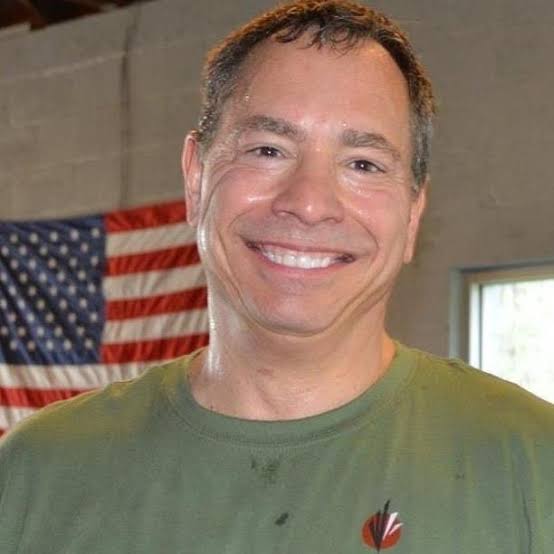
Jim Eglin
https://marylandsystema.comJim Eglin is the founder and chief instructor of Maryland Systema. He has trained in Systema, Krav Maga, judo, boxing, and jiu-jitsu, and received his full Systema instructor certification in 2019. Jim teaches practical self-defense with an emphasis on breathing, movement, balance, awareness, controlled contact, and responsible decision-making under pressure. He leads adult classes in Rockville and Takoma Park, Maryland.