Corporate self-defense workshops should give your staff practical skills, sound judgment, and a clear understanding of when and how to respond, not just a few memorized techniques. Effective corporate self-defense workshops in Maryland, should first teach employees to recognize trouble early, manage distance, set clear boundaries, and make sound decisions under pressure.
Effective corporate self-defense workshops, such as those offered by Maryland Systema, focus on equipping staff with practical skills, sound judgment, and a clear understanding of when and how to respond to potential threats. These workshops prioritize teaching employees to recognize trouble early, manage distance, set clear boundaries, and make sound decisions under pressure, rather than just memorizing techniques. The primary purpose is not to train employees to fight, but to help ordinary adults remain calm, recognize risk, avoid escalation when possible, and respond responsibly when they cannot simply walk away. Maryland Systema emphasizes that awareness, controlled movement, and clear verbal boundaries are crucial safety tools that expand options before physical contact begins.
This approach applies to employees who work in offices, travel between locations, interact with the public, work late hours, use parking garages, or manage difficult conversations. The purpose is not to train employees to fight. It is to help ordinary adults remain calm, recognize risk, avoid escalation when possible, and respond responsibly when they cannot simply walk away.
What a Corporate Self-Defense Workshop Should Teach
Personal safety training is most useful when it reflects the situations people may actually face. For many organizations, that includes unwanted contact, aggressive behavior, a grab or physical restraint, a conflict in a parking area, or a stressful interaction in a confined space. These situations do not always develop the way people expect. Distance changes. A person may be off balance, carrying a bag, seated at a desk, wearing work clothes, or unable to leave immediately.
A worthwhile workshop gives participants principles that can adapt as circumstances change. Rather than relying on a memorized sequence, participants learn to notice position, available exits, obstacles, body posture, and the behavior of the person in front of them. They practice moving without sacrificing balance and using their voice and body language to create clearer boundaries.
Physical skills have a place in this work, but they belong within a larger safety framework. A workshop should address how to recognize concerning behavior, leave early when possible, seek assistance, de-escalate without becoming passive, and use only the amount of force needed to get safe. That is a more realistic foundation than promising a simple answer to every threat.
Why Awareness and Movement Belong Together
Employees often think of self-defense as a response to an attack. By that point, options may be limited. Awareness expands those options before physical contact begins. It can mean noticing who is nearby when entering a parking garage, recognizing that a conversation is becoming more hostile, maintaining space during a difficult client interaction, or deciding not to continue an argument in a hallway with no easy exit.
Awareness alone is not enough if a person freezes when pressure rises. This is where breathing, posture, and movement matter. When people hold their breath and tense their shoulders, they often lose mobility and make poor decisions. Training can help participants regulate their breathing, keep their feet under them, and move with greater control when they feel rushed or intimidated.
This does not mean a workshop can remove fear or guarantee an outcome. It can help people recognize their stress response and continue making practical choices within it. For an employee who has never practiced this before, that may be the most valuable result of the session.
Boundaries Are a Practical Skill
Clear verbal boundaries are not simply a matter of confidence or personality. They are a safety tool. Participants should have an opportunity to practice using a direct voice, changing their position, and creating space without escalating the situation unnecessarily.
The right response depends on context. A firm boundary may be appropriate with someone who is crowding or touching a person without consent. In another situation, leaving quietly and getting support may be safer. Good instruction avoids rigid rules and helps participants consider distance, surroundings, the other person’s behavior, and whether an exit is available.
Simple Movement Is More Reliable Than Complex Techniques
Employees attending a one-time program do not need to memorize a long list of responses. They need a small set of practical concepts that work across different situations, positions, and body types. Training can cover maintaining balance during close contact, moving away from a grab, protecting yourself while getting up from the ground, and creating space when confined near a wall, desk, or other obstacle.
The value is not in trying to perform a technique perfectly. It is in understanding how posture, breathing, direction, and timing affect a person’s ability to move. Repetition under controlled pressure gives participants a more honest sense of what they can do while still keeping the training safe and accessible.
Designing Corporate Self-Defense Workshops in Maryland
The right format depends on your organization, workplace risks, and the employees taking part. A brief introductory program can cover awareness, boundaries, and basic movement, while a two- or three-hour practical program allows more time for hands-on training and repetition. Teams that regularly interact with the public may benefit from scenarios involving personal space, verbal escalation, and safely leaving confined areas. Employees who travel often may need greater emphasis on awareness in hotels, rideshares, parking facilities, and unfamiliar surroundings.
Before scheduling a workplace safety program, define what your organization wants employees to gain from it. You may need to address concerns about commuting, working late, public-facing interactions, confidence, mobility, or general personal safety. A clear purpose helps the instructor select relevant exercises and avoid spending time on material that does not match your team’s needs
A customized program should also account for the range of people in the room. Corporate groups may include adults of different ages, sizes, fitness levels, injuries, and prior experience. Training should not reward speed, strength, or prior martial arts knowledge. Participants need room to work at a manageable pace, ask questions, and opt out of an exercise when needed.
For Maryland organizations, workshops can be arranged at suitable locations throughout the greater Washington, DC region. Maryland Systema provides customized organizational training built around adaptable movement, awareness, breathing, balance, and responsible decision-making rather than competition or performance.
What Participants Can Reasonably Expect
A corporate workshop can improve awareness and introduce useful physical and verbal skills. It cannot make someone fully prepared for every violent encounter in a single afternoon. Organizations should be cautious of programs that suggest otherwise.
The most practical sessions give employees a foundation they can remember: stay aware of surroundings, manage distance, protect balance, communicate clearly, look for exits, and get help when possible. Participants can then choose to continue practicing if they want greater familiarity with close-range movement, restraint escapes, ground movement, or decision-making under increasing pressure.
This distinction matters. A one-time workshop is often a strong beginning, especially for employees who have never had any personal safety training. Ongoing practice develops the calm, timing, and adaptability that cannot be gained through explanation alone.
Creating a Respectful Training Environment
Self-defense training can raise anxiety or bring up difficult past experiences, especially when exercises involve physical contact. A professional program should address these concerns without making the training feel intimidating. Instructors should explain each exercise clearly, set firm expectations for consent and safety, and provide alternatives when an activity is not appropriate for a participant.
Pressure should increase gradually. People learn more when they can remain present enough to observe what is happening in their body and surroundings. Starting with simple movement, posture, and distance management allows participants to build familiarity before working with more resistance or realistic scenarios.
This approach also supports a healthier workplace culture. Employees are not being asked to prove toughness. They are learning to take their own safety seriously, respect others’ boundaries, and act with control when a situation becomes uncertain.
Questions to Ask Before Booking a Workshop
Organizations should ask how the training will be tailored to their environment, how physical contact and consent will be handled, and whether drills can be adjusted for different abilities. It is also reasonable to ask what participants will realistically be able to take away from the session and what requires continued practice.
Ask about the instructor’s background and teaching approach. Experience matters, but so does the ability to explain material calmly, manage a mixed group, and keep safety ahead of spectacle. The instructor should be comfortable discussing avoidance, de-escalation, and escape, not only physical responses.
Finally, consider logistics. A practical workshop needs enough open space for participants to move safely. Comfortable work clothing is usually sufficient, and specialized uniforms or equipment should not be necessary for an introductory session.
A well-designed workshop gives employees more than a temporary sense of confidence. It helps them become more aware of their surroundings, move with greater control, and understand how calm, practical decisions can reduce risk and create safer outcomes.
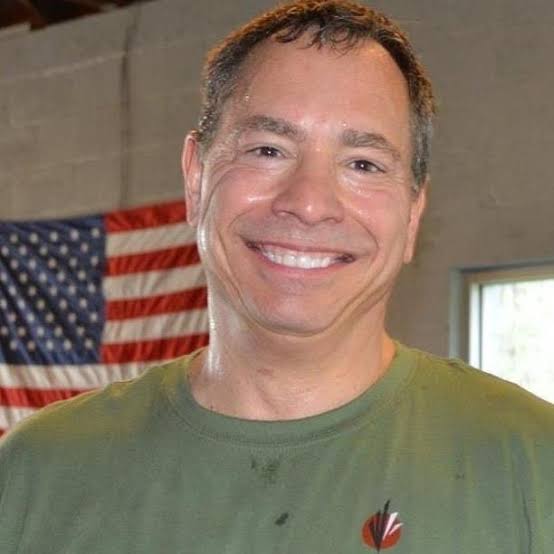
Jim Eglin
https://marylandsystema.comJim Eglin is the founder and chief instructor of Maryland Systema. He has trained in Systema, Krav Maga, judo, boxing, and jiu-jitsu, and received his full Systema instructor certification in 2019. Jim teaches practical self-defense with an emphasis on breathing, movement, balance, awareness, controlled contact, and responsible decision-making under pressure. He leads adult classes in Rockville and Takoma Park, Maryland.