A safety workshop should not leave you with a few dramatic techniques and the uneasy feeling that you would need perfect timing to use them. It should help you notice more, move with better balance, manage distance, and make clear decisions when another person’s behavior becomes unpredictable. That is the practical value of Montgomery County safety workshops designed for adults.
For a commuter walking to a garage, a parent navigating a tense public interaction, or a professional who wants more confidence without joining a competitive martial arts program, the goal is not to become a fighter. The goal is to recognize problems earlier, avoid unnecessary risk, and have useful options if avoidance is no longer possible.
What Montgomery County Self-Defense Workshops Should Teach
Good personal-safety training begins before physical contact. Many situations give warning signs. Someone may ignore a boundary, move too close, block your path, demand your attention, or suddenly change their tone or behavior. A useful workshop should help you recognize those changes without teaching you to view everyone around you as a threat.
Awareness does not mean constantly searching for danger. It means paying enough attention to your surroundings that you can make better choices. You may notice an exit, avoid getting trapped between people or objects, maintain more space, or leave before an interaction becomes harder to manage. These simple decisions often provide more protection than a complicated physical response.
Montgomery County self-defense workshops should also address verbal boundaries and de-escalation. Clear, direct language can establish a boundary, discourage unwanted contact, and give you time to move toward safety. A firm voice does not need to be aggressive. The objective is to reduce pressure, draw attention when appropriate, and create more options for leaving.
Physical training still matters because real encounters rarely remain orderly. Someone may grab your clothing, hold an arm, crowd you against a wall, or make contact where movement is restricted. Useful training does not promise a guaranteed response to every problem. It teaches you to maintain balance, keep moving, manage pressure, and continue making decisions as your position and circumstances change.
Why fixed techniques fall short
A memorized response can provide a useful starting point, but it cannot account for every situation. People differ in size, strength, movement, emotional state, and intent. The ground may be uneven. You may be carrying something, seated in a vehicle, recovering from an injury, or dealing with more than one person. A response that works well during a demonstration can become much harder to use when those conditions change.
That is why adaptable training matters. Instead of requiring participants to repeat a sequence exactly, a well-run workshop teaches principles that remain useful as circumstances change. Maintain your balance. Avoid becoming trapped in one position. Reduce unnecessary tension. Move toward open space. Leave when an exit becomes available. Those ideas can apply to a grab, a shove, close-range pressure, or a fall.
There is a trade-off. Principle-based training does not always provide the immediate satisfaction of learning a set response. Progress can seem less obvious at first. But understanding how to stay mobile, adjust to changing pressure, and make sound decisions gives adults something more useful than a long list of techniques to remember.
Breathing and balance under pressure
A memorized response can provide a useful starting point, but it cannot account for every situation. People differ in size, strength, movement, emotional state, and intent. The ground may be uneven. You may be carrying something, seated in a vehicle, recovering from an injury, or dealing with more than one person. A response that works well during a demonstration can become much harder to use when those conditions change.
That is why adaptable training matters. Instead of requiring participants to repeat a sequence exactly, a well-run workshop teaches principles that remain useful as circumstances change. Maintain your balance. Avoid becoming trapped in one position. Reduce unnecessary tension. Move toward open space. Leave when an exit becomes available. Those ideas can apply to a grab, a shove, close-range pressure, or a fall.
There is a trade-off. Principle-based training does not always provide the immediate satisfaction of learning a set response. Progress can seem less obvious at first. But understanding how to stay mobile, adjust to changing pressure, and make sound decisions gives adults something more useful than a long list of techniques to remember.
Managing distance, exits, and position
Distance is one of the most useful safety tools you have. More space gives you more time to observe, speak, move, and leave. A good workshop should help participants recognize when an ordinary interaction becomes too close, when someone is limiting their movement, and when their position makes it harder to leave.
Creating distance does not always mean backing away. A crowded train, busy sidewalk, workplace, or family gathering may limit how much space is available. In those situations, position becomes more important. You can angle yourself toward an exit, avoid being trapped against furniture or a vehicle, and keep your hands in a natural position that allows you to communicate while still protecting yourself.
Small adjustments can make a significant difference. A step to the side, a turn toward open space, or an object placed between you and another person can create more room and give you a better opportunity to leave.
What to expect from a responsible workshop
Safety training should be serious without making people feel pressured to prove themselves. Adults learn better when they can ask questions, work at a manageable pace, and increase intensity as their skill and comfort improve. Beginners should not feel embarrassed, rushed, or unsafe during training.
A responsible instructor explains why each exercise matters. Participants should understand when they are working on awareness, verbal boundaries, movement, escaping contact, or recovering from the ground. They should also feel comfortable discussing injuries, physical limitations, or concerns that affect how they train.
The training environment matters as much as the material. Workshops for ordinary adults should not require athletic experience, special equipment, uniforms, or an interest in competition. Someone returning to physical activity after years away may need a different pace than someone who trains regularly. Both can still work on the same core abilities: maintaining balance, managing distance, staying mobile, and making decisions under pressure.
Be cautious of programs that promise certainty. No instructor can guarantee that one response will work against every person or remove all risk. Responsible training acknowledges that uncertainty and helps participants improve their chances through awareness, movement, escape, and sound judgment.
Choosing the right workshop for your needs
Before choosing a workshop, think about what you want to handle better. If your main concern is walking to your car after work, awareness, distance, and verbal boundaries may matter most. If you are concerned about unwanted grabbing or close contact, look for training that includes controlled practice with movement, balance, and creating space. Organizations should also ask whether the material can be adapted to the needs of their workplace, community group, or participants.
Ask how physical pressure is introduced. Training should be realistic enough to show how people react when stress increases, but controlled enough that participants can learn without being overwhelmed. A short introductory workshop can build useful foundations, while ongoing classes provide more time to revisit skills and work with a wider range of situations.
Maryland Systema offers Montgomery County self-defense workshops built around adaptable movement rather than fixed routines. Training can include awareness, verbal boundaries, close-range contact, ground movement, and responses to changing pressure. The emphasis remains on recognizing problems early, leaving when possible, and using physical action responsibly when it becomes necessary.
Using what you learn in daily life
The most lasting result of a safety workshop may be a change in ordinary habits. You begin to look up rather than walking distracted. You notice exits without making a show of it. You trust yourself to set a boundary early. You understand that moving away is not a failure, and that calm action is often more effective than force.
Personal safety is not a state of perfect control. No one can predict every situation or remove all risk. But adults can improve how they breathe, stand, move, observe, and decide. A useful workshop gives you room to practice those skills honestly, then carry them into daily life with more steadiness and less fear.
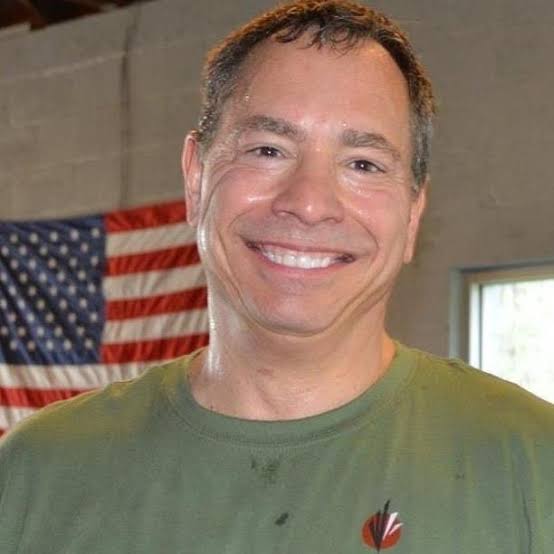
Jim Eglin
https://marylandsystema.comJim Eglin is the founder and chief instructor of Maryland Systema. He has trained in Systema, Krav Maga, judo, boxing, and jiu-jitsu, and received his full Systema instructor certification in 2019. Jim teaches practical self-defense with an emphasis on breathing, movement, balance, awareness, controlled contact, and responsible decision-making under pressure. He leads adult classes in Rockville and Takoma Park, Maryland.