7 Smart Personal Safety Boundaries That Work Under Pressure
A boundary is not only something you say. It is also the distance you keep, the position you choose, the exit you notice, and the decision to leave before a situation becomes physical. Personal safety boundaries help you respond when someone stands too close, makes unwanted demands, or refuses to respect a clear no.
Many adults think of self-defense as something that begins after an assault. But useful safety skills start earlier, when you recognize discomfort, preserve room to move, and communicate without getting pulled into an argument.
Setting personal safety boundaries does not mean assuming everyone is dangerous. It means recognizing when an interaction is changing and deciding how much access another person should have to your time, attention, personal space, and physical safety.
At Maryland Systema, we approach self-defense as more than physical contact. Awareness, breathing, balance, movement, and clear decisions all matter. The goal is not to win a confrontation. It is to recognize trouble early, avoid unnecessary conflict, and protect your ability to leave.
1. Understand What Personal Safety Boundaries Really Mean
Personal safety boundaries are the limits you establish around your body, space, time, belongings, and consent. They help define what behavior you will accept and how you will respond when another person crosses those limits.
Boundaries generally fall into three practical categories.
Verbal boundaries communicate what you want or do not want. Saying “Please step back,” “Do not touch me,” or “I am leaving” makes your position clear without inviting a long discussion.
Physical boundaries involve how you manage distance and access to your body. Stepping away from unwanted contact, moving toward an open doorway, or keeping a clear path to an exit are examples.
Situational boundaries involve decisions about where and when you interact. You might decline to enter an isolated room, stop a conversation in a parking garage, or move toward other people when someone becomes increasingly demanding.
These categories frequently overlap. You might tell someone to stop approaching while stepping away and moving toward a staffed area.
A boundary does not require another person’s agreement to be valid. You do not need to prove that your discomfort is reasonable before choosing to leave.
However, personal safety boundaries are not guarantees. Someone who is angry, intoxicated, manipulative, or determined to cause harm may ignore what you say.
That is why responsible boundary-setting includes action. Words are useful, but your positioning, movement, awareness, and access to assistance matter just as much.
2. Recognize When Someone Is Testing Your Boundaries
Pressure often develops gradually rather than beginning with an obvious threat.
Consider an interaction in which someone repeatedly asks for your phone number after you have declined. They continue moving closer when you step away. They ask where you live, question why you will not answer, or insist that you owe them an explanation.
None of these actions automatically predicts violence. However, repeated disregard for your choices can provide useful information about the interaction.
Effective personal safety boundaries begin with recognizing behavior rather than trying to determine another person’s intentions.
Ask yourself a few practical questions:
- Does this person accept a clear answer?
- Do they respect the distance I create?
- Are they interfering with my ability to leave?
- Are they following me after I change direction?
- Are they attempting unwanted physical contact?
- Is their behavior becoming more demanding or aggressive?
One uncomfortable interaction does not always require an emergency response. Context matters. A crowded train creates different spacing problems than an empty parking garage.
The important distinction is whether someone responds appropriately when you communicate or demonstrate a reasonable limit.
Your physical reactions also deserve attention.
You may notice shallow breathing, tightening shoulders, a sudden increase in tension, or an urge to move away. These reactions do not prove that another person intends harm, but they can remind you to reassess your surroundings.
Instead of concentrating only on the conversation, notice where you are standing, who is nearby, and which routes remain available.
Personal safety boundaries become more useful when you notice changing conditions early enough to make ordinary adjustments.
Changing seats, ending a conversation, or returning to a public area is usually easier before someone blocks your movement.
3. Use Clear Personal Safety Boundaries Without Starting an Argument
People sometimes hesitate to establish boundaries because they do not want to appear rude, aggressive, or unreasonable.
That hesitation is understandable. Most everyday interactions depend on cooperation and courtesy.
However, personal safety boundaries are not the same as personal challenges. You can communicate a limit without insulting, threatening, or humiliating another person.
Short statements generally communicate more clearly than lengthy explanations.
Examples include:
- “No, thank you.”
- “Please give me some space.”
- “Do not touch me.”
- “Stop following me.”
- “I am leaving now.”
- “I need you to move back.”
Choose language that fits the situation.
At work, you might say, “I am not comfortable continuing this conversation alone.” You can then move to a shared area or ask another employee to join you.
On public transportation, you might ask someone to step back while moving toward other passengers or the operator.
At a social gathering, you can decline unwanted attention without offering a detailed explanation.
You do not need to win an argument about whether your boundary is reasonable.
Your tone also matters, but there is no single correct way to sound.
A steady voice can help during an uncomfortable but nonviolent disagreement. When someone threatens you, blocks your escape, or ignores repeated requests to stop, a louder command may be necessary to attract attention and request assistance.
Avoid turning a boundary into a threat.
“If you do that again, you will regret it” challenges the other person without clearly identifying a safe next step.
“I do not want you following me. I am going to get help” communicates your intention without creating the same invitation to argue.
Most importantly, do not remain in a dangerous situation simply because you have not finished explaining yourself.
When leaving is the safer option, your actions matter more than finding the perfect words.
4. Protect Your Personal Space and Keep an Exit Available
Physical positioning supports personal safety boundaries.
If someone makes you uncomfortable, remaining close enough for unwanted contact can reduce your options. Whenever possible, create enough separation to observe what is happening and move without colliding with the other person.
That does not mean maintaining one specific distance at all times.
An appropriate gap depends on the environment, available space, the other person’s behavior, and your ability to move.
A few additional feet can be useful in an open room but less helpful if stepping backward places you against a wall or locked door.
Our article on distance management in self-defense explains how positioning, movement, and available exits work together.
In a tense interaction, pay attention to your balance.
Keep your feet available to move rather than planting them rigidly in one position. Avoid leaning so far backward that you lose your footing. Let your hands remain available for ordinary communication and protection without creating an unnecessarily threatening appearance.
At Maryland Systema, we practice relaxed, balanced movement because maintaining mobility matters when another person’s actions change unexpectedly.
You also need to consider the surrounding environment.
In a restaurant, sitting at the end of a booth may offer more freedom to leave than being trapped against a wall.
In a parking garage, returning toward a staffed building may be safer than continuing toward an isolated vehicle.
At work, moving a difficult conversation into a shared area can reduce isolation and provide access to help.
On a sidewalk, crossing toward an open business may offer a better option than continuing through an empty area.
These decisions are not about preparing to fight. They are about preserving your choices.
Personal safety boundaries become stronger when your words, position, and movement all support the same goal: maintaining enough freedom to respond.
5. Know When Personal Safety Boundaries Are Being Ignored
One of the most important decisions in personal safety is recognizing when talking is no longer helping.
Someone who ignores a request for space may continue approaching. Another person may block a doorway, grab your clothing, or refuse to release your arm.
When that happens, the situation has changed.
Your priority is no longer explaining the boundary. It is protecting yourself and finding a way to safety.
The appropriate response depends on the immediate circumstances.
If a clear exit is available, leaving may be your safest option. If other people are nearby, calling attention to the situation can help. If someone prevents you from moving, physical self-defense skills may become necessary to protect yourself and create an opportunity to escape.
There is no universal response that works against every person, position, or environment.
A narrow hallway presents different problems than an open parking lot. A sudden grab can affect your balance differently from a push. Uneven footing, crowded surroundings, and limited visibility can all change your options.
Our article on self-defense under pressure discusses how breathing, movement, balance, and awareness contribute to your ability to respond when conditions change.
At Maryland Systema, we explore these problems through controlled physical contact and gradually increasing resistance.
Students practice recognizing when unnecessary tension restricts their movement. They learn to adjust their position, maintain or recover balance, and continue looking for opportunities to disengage.
The purpose is not to overpower every training partner.
It is to remain capable of responding when a familiar movement no longer works as expected.
Responsible physical self-defense also requires judgment. Any force used should be reasonable and proportionate to the immediate threat, consistent with applicable law.
Once you can safely escape, disengaging is generally better than prolonging the confrontation.
6. Establish Boundaries With People You Already Know
Personal safety boundaries are not limited to encounters with strangers.
Some of the most difficult situations involve coworkers, acquaintances, friends, relatives, or people with whom you have an ongoing relationship.
Familiarity can make a person reluctant to speak directly. You might worry about damaging a relationship, creating tension at work, or appearing overly sensitive.
These concerns are real, but they do not eliminate your right to make decisions about personal space, unwanted contact, and participation in uncomfortable interactions.
For example, a coworker may repeatedly enter your personal space despite requests to stop. An acquaintance may insist on walking you to your car after you decline. Someone at a gathering may use physical contact to pressure you into continuing a conversation.
The first response does not always need to be confrontational.
You can state what you want, change the environment, involve another person, or end the interaction.
Repeated violations deserve more attention than a single misunderstanding.
If someone continues crossing your boundaries, think about how you can reduce isolated contact, document concerning behavior when appropriate, and seek support through available workplace, community, or legal resources.
Situations involving threats, stalking, coercion, or abuse require particular care. A direct confrontation or sudden departure is not always the safest approach when the other person controls access to housing, transportation, money, or other essential resources.
In those circumstances, individualized safety planning is important.
The National Domestic Violence Hotline’s safety-planning resource offers information about preparing for unsafe situations and identifying practical sources of support.
The central principle remains the same: personal safety boundaries should support your actual safety, not force you into a confrontation simply to demonstrate firmness.
7. Practice Personal Safety Boundaries Before You Need Them
Knowing what to do and being comfortable doing it are different things.
You may understand the importance of setting limits but still hesitate when someone stands too close, becomes demanding, or touches you without permission.
Practice helps make those decisions more familiar.
Start with ordinary situations.
Decline an invitation without offering several explanations. Ask someone to move their belongings so you can pass. Practice saying “No” or “Please step back” in a clear voice.
These small interactions provide opportunities to become comfortable communicating directly.
You can also practice awareness.
When entering an unfamiliar building, notice where the exits are located. In a parking area, observe which routes lead toward other people or staffed locations. On public transportation, notice where assistance is available.
This does not require constant vigilance. It means taking a brief look at your surroundings so you have more information if circumstances change.
Physical training adds another dimension.
In a controlled learning environment, a partner can gradually approach while you practice communicating a boundary, changing position, and moving toward an agreed exit.
As you become comfortable, the instructor can change the angle of approach, available space, or amount of resistance.
The exercise should remain manageable, with clear limits and an understanding of how to stop.
At Maryland Systema, we connect these decisions to breathing, balance, relaxed movement, and awareness of the surrounding environment.
You learn how tension changes your posture, how movement affects your stability, and why maintaining access to an exit matters more than holding a fixed position.
Training also provides a chance to recognize habits that are easy to miss in daily life.
Some adults stop breathing naturally when pressure increases. Others become rigid, lean away without moving their feet, or concentrate so much on the other person that they overlook open space.
Recognizing these reactions gives you something specific to improve.
You do not need previous martial arts experience or exceptional physical fitness to begin.
Good instruction should introduce challenges gradually, respect physical limitations, and help students develop useful responses without unnecessary risk.
How Maryland Systema Teaches Personal Safety Boundaries
Maryland Systema teaches self-defense classes for adults who want to improve their ability to recognize danger, manage distance, protect their balance, and make clear decisions under pressure.
Our approach does not depend on memorizing a fixed response to every possible confrontation.
Instead, training connects awareness, breathing, movement, and controlled contact so students can learn how their choices affect their safety.
A person who can recognize unwanted pressure early may avoid physical contact entirely. Someone who maintains balance and freedom of movement has more options if an interaction changes unexpectedly.
And someone who understands when to disengage is less likely to remain involved in a confrontation simply to prove a point.
These are the practical reasons we include personal safety boundaries in adult self-defense training.
Classes are available in Rockville and Takoma Park, Maryland. Adults of different experience and fitness levels can begin at a manageable pace.
There are no belts, required uniforms, or long-term contracts. Your first group class is free.
Visit Maryland Systema to learn more about our self-defense classes and arrange your first visit.
Personal Safety Boundaries Begin With Your Decisions
Personal safety boundaries are not about becoming suspicious of everyone or turning ordinary disagreements into confrontations.
They are about recognizing when an interaction is changing and making reasonable choices while you still have options.
A short statement, an adjustment in distance, a decision to involve another person, or the choice to leave can all help protect your safety.
No boundary guarantees another person’s cooperation, and no self-defense class can eliminate every risk.
However, practicing awareness, communication, movement, and sound judgment can help you recognize problems earlier and respond with greater control.
The goal is simple: protect your space, preserve your choices, and get home safely.
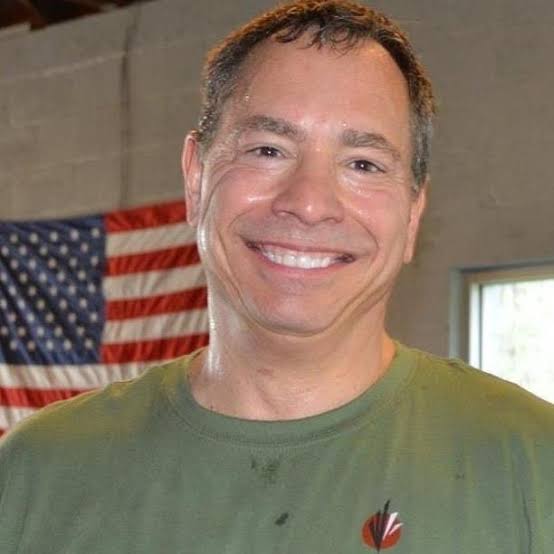
Jim Eglin
https://marylandsystema.comJim Eglin is the founder and chief instructor of Maryland Systema. He has trained in Systema, Krav Maga, judo, boxing, and jiu-jitsu, and received his full Systema instructor certification in 2019. Jim teaches practical self-defense with an emphasis on breathing, movement, balance, awareness, controlled contact, and responsible decision-making under pressure. He leads adult classes in Rockville and Takoma Park, Maryland.