A grab, an angry person standing too close, or a fall in a crowded space rarely happens in the neat sequence shown in a demonstration. Systema for self-defense prepares you to notice what is changing, stay mobile, and make useful choices when distance, balance, and pressure are not fully under your control.
That does not mean training for a fight. Responsible self-defense starts much earlier: recognizing a concern, maintaining space, setting a clear boundary, leaving when possible, and asking for help. Physical skills matter when avoidance has failed or there is no safe way out, but they work best alongside awareness and clear decision-making.
How Systema for Self-Defense Works
Systema is a movement-based approach to personal safety and physical training. Instead of relying on a long series of fixed responses, training develops qualities that remain useful as circumstances change: breathing, posture, balance, awareness, relaxed movement, and clear decision-making under pressure.
That matters because real situations rarely unfold as expected. Someone may grab your arm instead of pushing. You may be backed against a car, carrying something, seated, tired, or already off balance. The ground may be uneven, the space may be narrow, or other people may limit where you can move. A response that depends on one exact grip, angle, or starting position can become less useful as soon as those conditions change.
Systema training focuses on principles that help you adjust. Can you keep breathing instead of holding your breath? Can you regain balance without becoming rigid? Can you move away from pressure, protect your position, and identify a safer direction? Can you stay aware enough to make a clear decision instead of reacting without thinking?
These are simple questions, but they address the conditions that often make self-defense difficult: uncertainty, limited space, changing pressure, and the need to make decisions while moving.
Skills That Improve Decision-Making Under Pressure
Breathing when pressure builds
People often tense up or hold their breath when they are startled, pushed, or overwhelmed. That reaction can make movement more rigid, narrow your attention, and make it harder to think clearly. Breathing practice does not remove fear or guarantee calm. It gives you a way to stay functional while your body is under stress.
In class, breathing is practiced during movement, physical contact, exertion, and recovery. The goal is not to perform a special breathing method. It is to keep breathing when pressure increases so you can continue to observe, move, speak, and make decisions.
For breathing practice outside class, the NHS offers a simple guide to breathing exercises for stress. It recommends gentle, comfortable breathing without forcing it and practicing regularly. In Systema for self-defense, you also practice keeping your breathing steady while moving and working through controlled contact.
When you can keep breathing, you are better able to notice an opening, create space, communicate clearly, or disengage when the opportunity appears.
Staying balanced and mobile
Practicing Systema for self-defense involves learning to keep your balance while changing direction, adjusting your position, and responding to contact. In Systema, students practice walking, turning, lowering their body, recovering from a stumble, and moving to and from the ground without creating unnecessary tension.
Balance matters because losing it can limit your choices quickly. If you are leaning, bracing, or struggling to recover your footing, it becomes harder to move away, change direction, or respond to what is happening around you. Training helps you recognize when your balance is beginning to break and make adjustments before your movement becomes restricted.
These skills also carry into everyday life. Better coordination, body awareness, and mobility can make ordinary movement easier and reduce the habit of tightening through the shoulders, hips, and back when you feel unstable or under pressure.
Managing distance and position
Distance gives you options. When you recognize a problem early and create space, you have more time to observe what is happening, change direction, or leave before physical contact begins. If someone moves into your space, changing your position can be more useful than standing still and continuing the confrontation. Systema training helps you notice where you are in relation to another person, nearby obstacles, other people, and possible exits.
Moving forward is not always the best response. You may need to step aside, change your angle, move toward an exit, use a clear voice, or place an object between yourself and another person. Small changes in distance and position can create more room to move and reduce the chance of becoming trapped.
The purpose is not to dominate the encounter. It is to limit your exposure, maintain your ability to move, and preserve a path toward safety.
Adapting when physical contact begins
Physical contact can take many forms: a wrist grab, a shove, a bear hug, being pressed against a wall or other surface, or close-range striking. Systema training introduces different kinds of pressure gradually so students can learn how their body reacts and how to keep moving when contact changes.
Instead of practicing one fixed answer for every grab or position, students work on protecting themselves, moving their feet, changing angles, reducing pressure, and creating opportunities to disengage. Training can also include falling, ground movement, and getting back to a standing position safely. The emphasis is on remaining functional rather than performing a perfect response.
This approach can feel different from learning a choreographed defense with a clear beginning and end. There is not always one answer to memorize. Over time, students develop a broader ability to adjust when the grip changes, their position becomes awkward, or the surroundings limit what they can do.
Recognizing problems before they become physical
A physical response is only one part of self-defense, and often not the first or best choice. Awareness means paying attention to what is happening around you without becoming fearful or suspicious of everyone. It can mean noticing someone following too closely, a conversation becoming more hostile, an isolated parking area, or how much attention your phone is taking away from your surroundings.
De-escalation uses time, distance, tone, and clear boundaries to reduce the chance that a situation becomes physical. That can mean leaving a conversation, refusing to continue an argument, moving toward other people, or saying firmly, “Stop. Stay back.” No single phrase works in every situation, and continuing to engage with an aggressive person can sometimes increase the risk.
The practical goal is to keep assessing what is changing. Is there a safe exit? Can you create more distance? Can you get help? Are you responsible for a child, friend, or family member? Has the situation reached the point where you need to protect yourself immediately?
Systema training treats those decisions as part of self-defense itself. Recognizing a problem early, creating space, and choosing when to leave can matter just as much as knowing what to do after physical contact begins.
How Systema Training Progresses
Training in Systema for self-defense begins with manageable movement and controlled contact, giving beginners time to learn before the pressure increases. Training progresses gradually, starting with basic movement and controlled contact before adding more resistance, uncertainty, and intensity. Students have time to understand how their body responds before the demands increase.
Training can include strikes, grabs, restraint, close-range contact, ground positions, confined spaces, multiple attackers, and weapon-related threats. The purpose is not to create the impression that every situation has a safe or reliable physical solution. Weapon training, for example, helps students understand distance, timing, movement, and the serious risks involved. Avoidance, escape, or compliance can be the safer choice depending on the circumstances.
The pace should also reflect the individual. Someone returning to physical activity, managing an old injury, or entering a martial arts class for the first time does not need to train at the same intensity as someone with years of experience. Effective training introduces enough pressure to challenge your movement and decision-making without treating pain, exhaustion, or intimidation as measures of progress.
Who Can Benefit From Systema Training
Systema for self-defense can work well for beginners who want practical training without uniforms, belt rankings, tournaments, or an emphasis on proving toughness. It can also give experienced martial artists another way to work on movement, relaxation, balance, and adaptability when pressure changes.
Different people often come to training for different reasons. A commuter may want better awareness and more control over personal space. A parent may want to move safely while staying aware of a child. An older adult may place more value on balance, mobility, and reducing the chance of being pulled off balance. The circumstances differ, but the underlying skills remain similar: keep breathing, stay mobile, protect your balance, and make clear decisions.
No form of training removes risk, and no approach works the same way in every situation. Size, health, surroundings, surprise, the number of people involved, and the presence of a weapon can all change what is possible. Consistent practice does not make dangerous situations simple, but it can help you recognize more options and respond with better judgment.
For adults in Rockville, Takoma Park, and the Washington, DC area, Maryland Systema provides a controlled environment for practicing these skills without uniforms, contracts, or specialized equipment. Your first group class is free, so you can experience the training before deciding whether it fits what you are looking for.
Practicing Systema for self-defense helps you work toward better awareness, steadier breathing, and more comfortable movement. The goal is to recognize trouble early, create space, and make responsible decisions as circumstances change, with getting to safety guiding your choices.
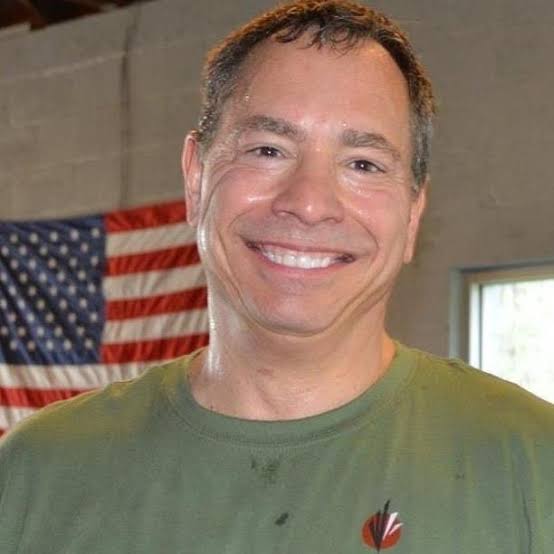
Jim Eglin
https://marylandsystema.comJim Eglin is the founder and chief instructor of Maryland Systema. He has trained in Systema, Krav Maga, judo, boxing, and jiu-jitsu, and received his full Systema instructor certification in 2019. Jim teaches practical self-defense with an emphasis on breathing, movement, balance, awareness, controlled contact, and responsible decision-making under pressure. He leads adult classes in Rockville and Takoma Park, Maryland.